

Public relations (PR) and media relations are often used as if they mean the same thing. They are closely connected. Media relations is one part of public relations, with its own audience, methods and goals.
What Is Public Relations?
The Canadian Public Relations Society defines public relations as "the strategic management of relationships between an organization and its diverse publics," using communication to build mutual understanding, meet organizational goals and serve the public interest.
In PR, "publics" means specific groups of people who can affect an organization or be affected by it. For a construction project, that might include residents, nearby businesses, elected officials, regulators, employees and the media. PR work can include:
- Internal communication that keeps employees informed.
- Community outreach, sponsorships and public events.
- Social media, newsletters and website content.
- Crisis communication and reputation management.
- Stakeholder relations with neighbours, partners and community groups.

What Is Media Relations?
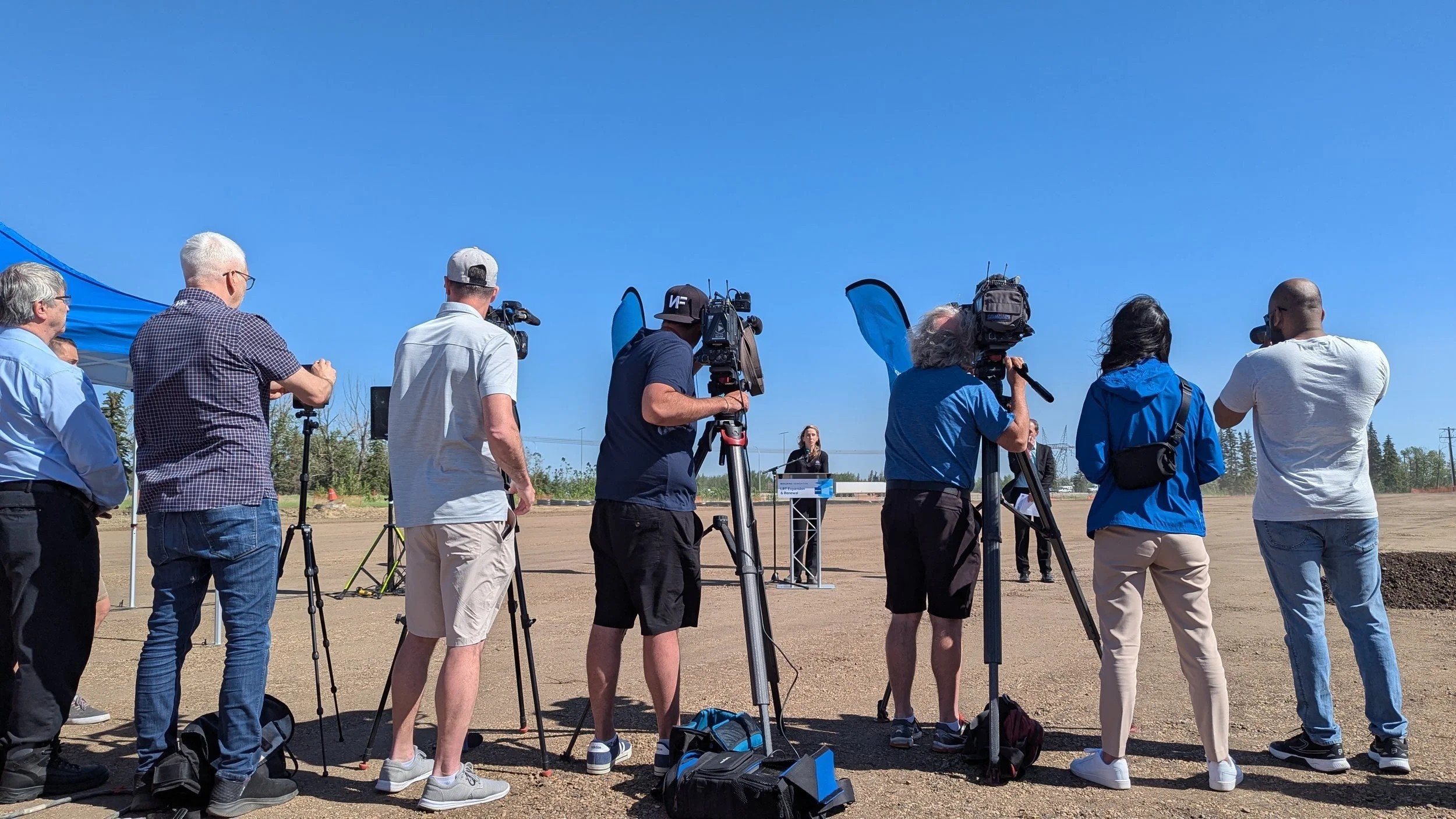
Media relations is the part of PR that works with journalists, editors and news outlets, and increasingly with podcasters and online creators who cover a topic or region. The goal is accurate, fair coverage that helps an organization reach audiences it cannot easily reach on its own. Media relations work can include:
- Writing and distributing news releases and media advisories.
- Pitching stories to reporters who cover the subject.
- Organizing interviews, media availabilities and announcement events.
- Preparing spokespeople through media training.
- Responding to media inquiries and tracking coverage.
| Public Relations | Media Relations | |
|---|---|---|
| Audience | Every group that can affect or be affected by the organization | Journalists, editors, news outlets and online creators |
| Channels | Direct channels such as events, websites, newsletters, social media and meetings | News coverage in print, broadcast and online media |
| Control | The organization controls the message and timing | Journalists decide whether and how to cover the story |
| Time frame | Ongoing relationships built over months and years | Often tied to specific announcements, milestones or issues |
Definition: Canadian Public Relations Society
Why Organizations Use Both
News coverage and direct channels reach different people. Employees, neighbours and partners usually hear from an organization directly, while a wider audience follows the local news. A PR strategy sets the messages and priorities for both, and media relations carries some of those messages through the news.
Media relations is one of the ways a public relations strategy reaches people.
We write releases, prepare spokespeople, coordinate media events and manage media inquiries for organizations across Alberta.
Explore Media RelationsHow the Two Work Together in a Crisis
During an incident, reporters can call within hours, and the people directly affected need information at the same time. Media relations gets accurate information into news reports. Direct channels such as a website, social media and phone or email outreach reach affected people with the detail they need.
Our post on the 2022 Rogers outage looks at how public communication worked during a national service disruption.
- Who are the groups that most affect, or are most affected by, our work?
- Which of them do we reach directly, and which mainly through the news?
- Do we have a trained spokesperson ready for media requests?
- Are our direct channels and our media messages consistent?
- Who handles media calls if something goes wrong after hours?
Need help with public relations, media relations or both?
We help Alberta organizations plan their communication and work with the media around projects, announcements and issues.
