


- Home
- Case Studies
- Media Training
Preparing for a Media Interview When Some Information Is Off‑Limits
Media training for a technology and defence company whose spokespeople had shared more in an interview than they intended.
- Client
- Undisclosed
- Sector
- Technology and Defence
- Service
- Media Training
- Date
- 2026
Avoiding the “I Said Too Much” Feeling
An industry publication invited a high-tech company to talk about its work and what makes it unique.
Simple questions followed. Each one made sense on its own. Taken together, the answers produced a published story that revealed proprietary information and drifted away from the company's key messages.
When the article came out, the company saw that its excitement about its own innovation had led it to share more strategic information than it intended. More media opportunities were coming, and the company knew it could not approach them the same way.
“Tell us about your company and what makes it unique.”
- How much does your product cost?
- When did you form?
- How much product do you make? Who buys it?
- Who are your main competitors?
- How much do you expect to grow?
- How many employees do you have? What do they do?
The task was to prepare company spokespeople to resist the full-disclosure reflex, and to stay calm enough under pressure to politely stop answering a question.
From Awareness to Control
The company wanted more people to know about its work, since awareness brings investment interest and industry recognition. The workshop showed participants the other side of that awareness. A media interview becomes a permanent, searchable record, and anyone can read it, including competitors.
Taking the Original Interview Apart
reVerb recreated the reporter's questions and worked through the upside and the potential downside of each answer.
A prediction that production would double in the coming year, for example, also signalled that new systems were being installed, hiring was moving quickly, new vendors were coming on board and cybersecurity processes might not have caught up.
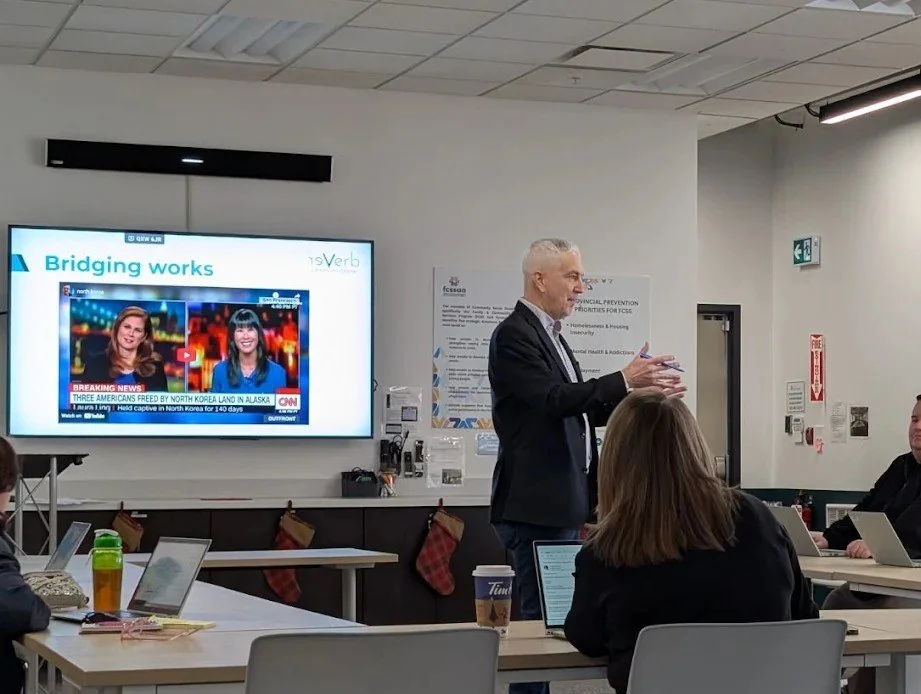
Practising Under Questioning
Customized, scenario-based interview practice gave spokespeople the chance to test their responses and recognize pressure points. Participants came face to face with their natural tendency to offer more than a question asked for.
They drilled basic and advanced bridging: acknowledge a tricky question, signal a move away from it, then land a key message.
- Bridging
- Key Messages
- Question Typology
- News Values
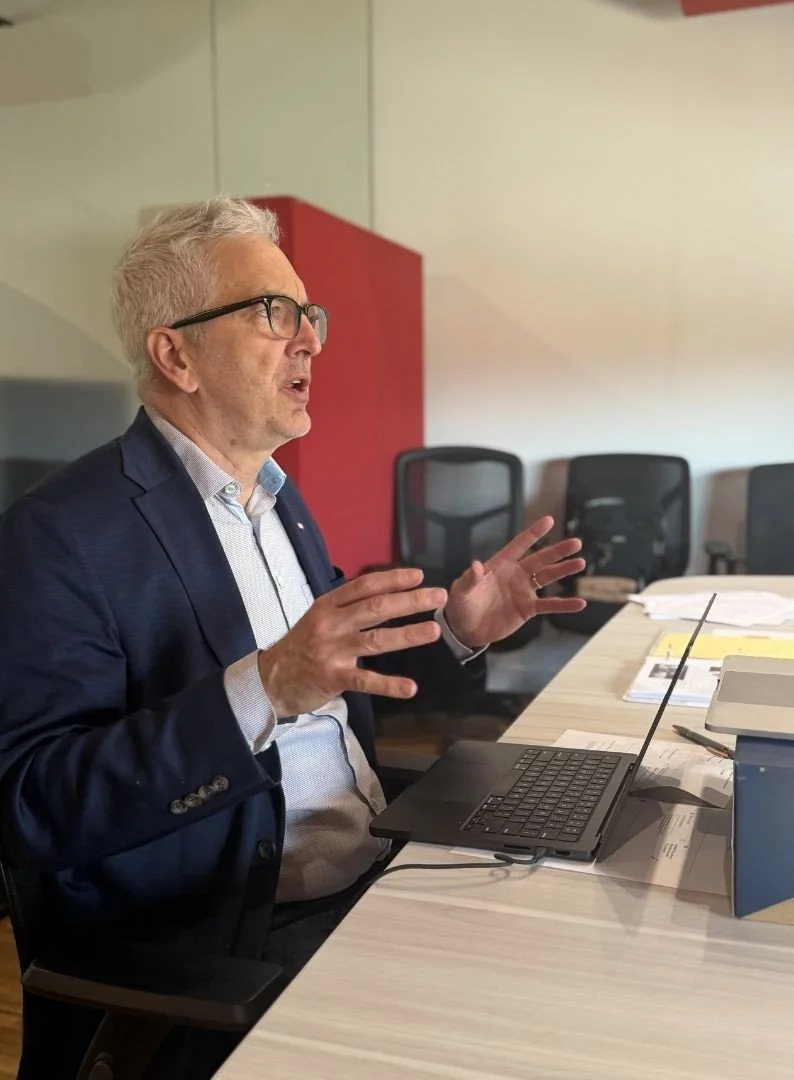
The Dial of Precision
Participants used reVerb's Dial of Precision to craft answers on a spectrum, from exact numbers to narrow ranges to broad ranges to qualitative descriptions.
Choosing a setting on the dial before the interview means a spokesperson has an answer ready for questions about cost, output and growth.
- Exact number“Production will reach 10,000 units next year.”
- Narrow range“Between 9,000 and 11,000 units.”
- Broad range“Several thousand more units.”
- Qualitative“We expect strong growth.”
Example answers for illustration.
reVerb tailored a recent case study to show how experienced spokespeople rely on a working knowledge of media question types to inform and explain while staying on message. Across the exercises, participants looked at what makes a story newsworthy in legacy and digital media, and at what drives a reporter to ask the questions they do, beyond an interest in the company's story.
The Results
A Shift in Perspective
Spokespeople saw an opportunity to shape the narrative, rather than locking down and saying nothing.
Anticipating Where a Topic Leads
Participants grew more adept at predicting where a line of questioning could go.
Confidence With the Unexpected
They became more confident that they could answer an unexpected question without disclosing more than they planned.
Respect for Preparation
Participants left with a deeper appreciation for preparation and practice before any interview.
Every Interview Is a Permanent Record
Taking time to get ready for a media interview is an investment in the published story.
An interview that builds awareness also builds strategic visibility. What that visibility costs depends on who is reading.
Preparation takes more than memorized answers. Staying present and keeping control under pressure take time and repetition.
What the workshop covered
- A reconstruction of the original interview, question by question
- Scenario-based interview practice built around the company
- Basic and advanced bridging techniques
- The Dial of Precision for questions about numbers
- News values in legacy and digital media
Have a Media Interview Coming Up?
reVerb prepares spokespeople to tell their story with control over what they share. Each session is built around your organization and the questions you are likely to face.
