

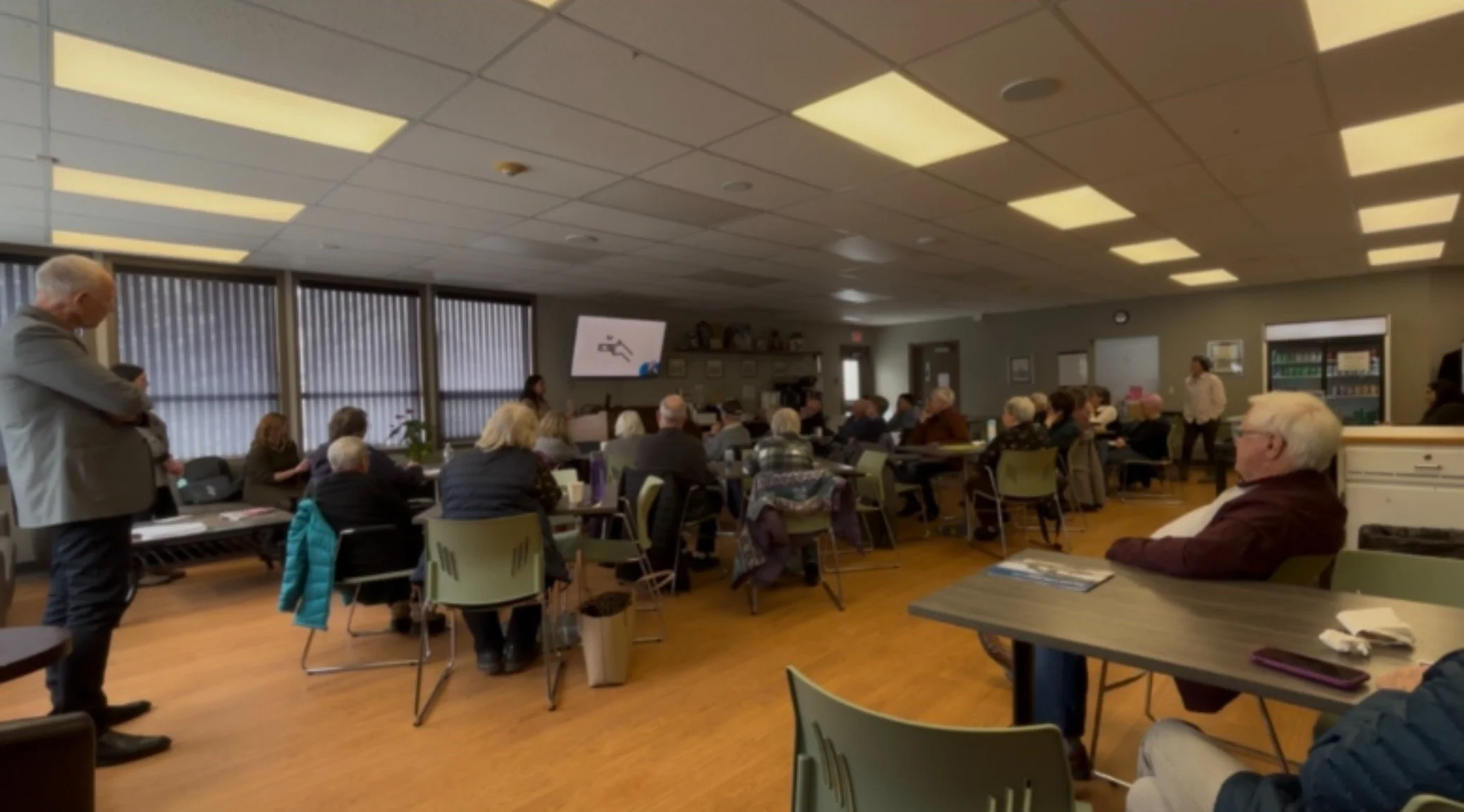
When construction changes how people get to work, school or the grocery store, frustration can build. A community meeting gives that pressure somewhere to go. Residents hear directly from the project team, ask their questions and see that someone is listening.
Our stakeholder relations team has run community meetings on LRT and infrastructure projects in Edmonton for years.
When residents meet the people working on a project face to face and hear the full story, the pressure in the room often eases.
People get project information from many places, and some of it is not accurate. A story can spread about why traffic is flowing one way or why the contractor made a decision. A meeting is a chance to replace that story with the facts.
Residents hear from the people making decisions, including the owner and the contractor.
People can share concerns and frustration with the people who can act on them.
Suggestions from the community are taken back to the project team and reviewed.
Arrive Prepared
Our team does its homework before every meeting. We review questionnaires, monitor news coverage and log the concerns and conversations that have come in, so we know what the room is likely to ask before we arrive. Showing up unprepared does not serve the project or the community.
Our construction media monitoring service is one of the tools that supports that preparation.
An Answer, Even When It Is No
At one LRT construction meeting, a resident said it made no sense to leave out a set of traffic lights that would allow a left turn into the neighbourhood.
The project team was able to explain that the construction company and the City had looked at the idea. They explained why it was not safe and what it would do to traffic going in the other direction.
The answer got nods of approval from the room.
Built on People
A good community meeting is a conversation between neighbours and the people building something in their neighbourhood. The project team is there to listen as much as to explain.
People bring their own lives to the meeting. They walk their children along a route, shop at a certain store or need customers to reach their business. Some ask why the work cannot be done another way. Sometimes that request conflicts with utility work, timelines or other parts of a complex project. When it is a good idea, our team takes it back to the project for review.
Our stakeholder relations team plans and runs community meetings, responds to residents and businesses and keeps a record of every concern raised.
Explore Stakeholder RelationsEngagement as Risk Management
reVerb CEO Quinn Nicholson sees proactive community engagement as part of managing project risk.
"By our talking to the public, we are not going to add risk by making people more worried," Nicholson said. "We are going to be able to alleviate a lot of the fears and concerns and communicate with the public in a way that supports the project."
Our post on when to bring in a stakeholder engagement firm looks at how engagement fits into a project's risk planning.
Where the Conversations Happen
Community meetings take place in school gyms, auditoriums, community halls, parks, outdoor events and online. The format depends on the project and the community, and each one aims to give people accurate information and a chance to be heard.
- What questions and concerns are we likely to hear, and do we have answers ready?
- Are the people who made the key decisions in the room?
- How will we record what people raise?
- How will we follow up on ideas we agree to look at?
- Do people have another way to take part if they cannot attend?
Planning a community meeting for your project?
We help project owners and contractors in Alberta prepare for, run and follow up on community meetings.
