

As Safe as Necessary
When the playgrounds were ribboned off during COVID, Trevor Zahara went for a run through Mill Creek Ravine and found the children. They were in the forest dragging logs and damming the creek. One child stood frozen on a rock, afraid of the gap to the next one, until another took off their shoes and stood in the water beside them as a spotter. Trevor has built playgrounds for most of his working life. Watching the ravine that spring was like seeing his own childhood play out in the middle of a city.
Infrasound Podcast | reVerb Communications
Trevor grew up on a farm on the banks of a river in northern Alberta, and the river valley was his playground. He and his brother Jason built a four-storey treehouse in the forest from salvaged boards, with a rope ladder and a fireman's pole, and kids from neighbouring farms rode their bikes in from a couple of miles away to join them. The brothers launched homemade rockets from the top. A launch only counted if the rocket cleared the edge of the forest and landed in the yard.
He is now the president of Peak Play Consulting, which designs and builds indoor and outdoor play spaces. His work includes the indoor playground at Terwillegar Recreation Centre and 95 fast food restaurant playgrounds across Western Canada, with others in Egypt, Hong Kong and the Caribbean.
The hosts sat down expecting a conversation about building playgrounds. Most of the hour went to what play is for.
A Child's Work Is Play
Asked for the single most important purpose of a playground, Trevor answered with growth and development. His shorthand is that a child's work is play. The UN Convention on the Rights of the Child recognizes play as a right of every child in Article 31, and Trevor treats it as the way children build the platform they will operate from for the rest of their lives.
Part of that development runs through senses most people never learn the names of. Beyond the familiar five, Trevor points to the vestibular sense, which governs balance and movement. Proprioception tells you where your body is in space. Interoception is the awareness of what is happening inside your body. He opened a talk in Belgrade on that last one. His hand was shaking on the microphone, so he told the room he could feel his nerves, pressed the microphone to his chest to steady it and kept going. That self-awareness, and the confidence to adjust without worrying what anyone thinks, is something he says children build through play.
One of the hosts spent childhood spinning on the merry-go-round until it was impossible to stand up or see straight, chasing a sensation with no name. Trevor's read is that this is the point of it. Get up to speed, find the edge, go a little too far and come back.
As Safe as Necessary
The phrase Trevor says he lives by in playground development comes from Mariana Brussoni, a developmental psychologist at the University of British Columbia who leads its Outside Play Lab. Play spaces should be "as safe as necessary, not as safe as possible." Children are allowed to fail and allowed to fall, because that is where the learning happens.
On the ground that looks like graduated risk. Trevor describes a product he saw at an industry convention. Two raised platforms would usually be joined by a bridge. On this one, a pendulum pole with footplates and handles hangs between them, and a child builds momentum, swings across and jumps off the far side. Balance beams for younger children sit around 45 centimetres off the ground. For older children the beam might be a metre and a half up, with a safety rope to hold until they are confident enough to let go.
Scandinavian manufacturers were designing this way forty years ago, Trevor says, and they are what drew him to Europe more than twenty years ago to start importing equipment. He found family companies three generations deep that measured profit against the next generation and built to developmental need, down to step heights an 18-month-old can manage. The North American equipment he had grown tired of, in his account, was engineered for repeatable assembly and few warranty claims before anyone asked what it did for a child.
The First Step Is a Filter
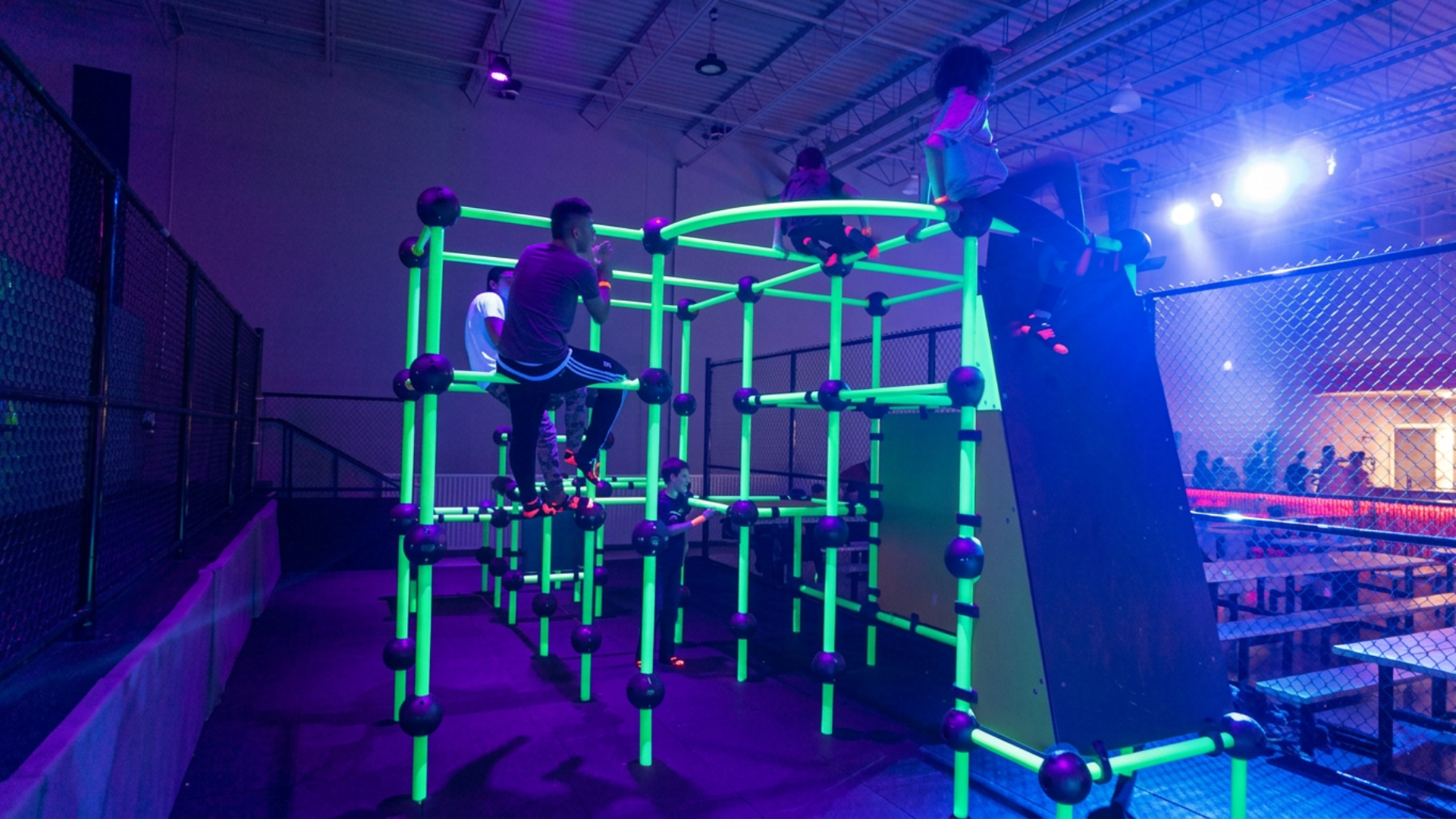
Asked how someone without his experience can assess a playground, Trevor starts with proportion. Children gravitate to equipment sized for them, where they feel safe and still challenged. A well-designed space uses that as a filter. The first step onto the older children's structure might be 60 centimetres high, which keeps a toddler off until they are big enough or confident enough to get up on their own.
The same thinking runs through the safety standard. Playgrounds on City of Edmonton parkland are built to CAN/CSA-Z614, and Trevor explains how the inspection kits work. A torso probe represents a small child's body. If it slides under a railing or through a gap, a head probe has to pass through as well, or the design fails and gets modified. Handrails are sized to the hands of each age group, and he says the standard separates equipment for children from 18 months to five years from equipment for five to twelve.
Proportion also teaches the limit. One of the hosts took his almost-three-year-old grandson to a slide bigger than the boy would have chosen and stood at the bottom encouraging him. The boy shook him off and went back to the slide he liked. Trevor heard two lessons in it. The child set his own limit, and he trusted his grandfather to let him act on it. Trevor remembers the other side of that moment from when he was about ten. He could not swim, and he walked to the end of a diving board to look around, then turned to find a lifeguard blocking the ladder. He said he could not swim. The lifeguard jumped in and swam beside him to the side of the pool.
Bring the Landscape In
Trevor won his first commercial playground as the rookie against established firms. He skipped the slides and the price and asked the committee to close their eyes and remember the happiest place they had played as children, and how it felt. Then he told them he wanted to create that feeling in their community. Given a free hand, he would build them hills, boulders and a stream with wind in the trees. His accountant, he told them, said he had to sell them some equipment.
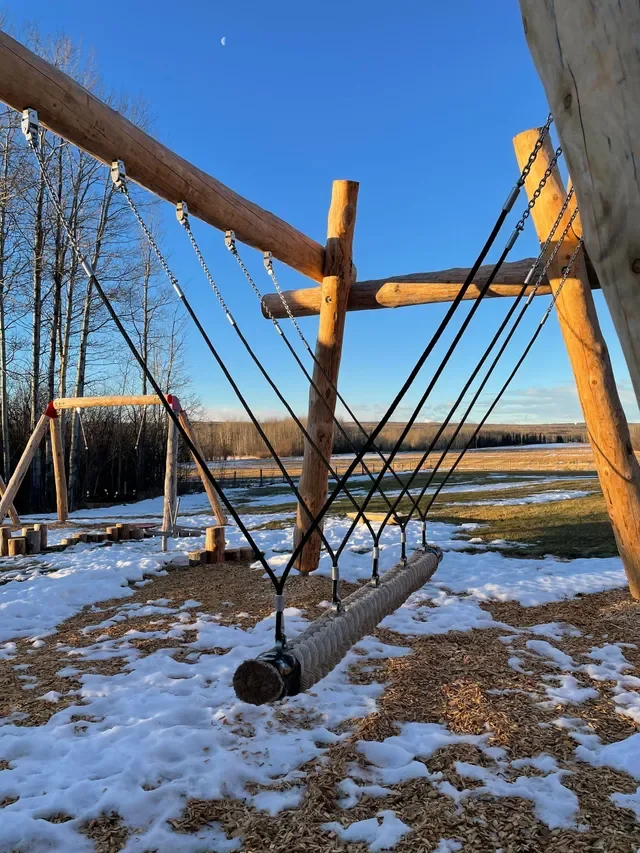
Over time that became logs, boulders, plantings and earthen paths alongside the manufactured pieces. He points to outdoor kindergartens in Norway, where three-year-olds climb near-cliffs and slide down in the mud, and to research from Studio Ludo, a Philadelphia non-profit led by Meghan Talarowski that maps how people of every age move through play spaces. In the study Trevor describes, a park in England was observed before and after it was rebuilt with hills, trees, boulders and landscaping, and activity in the space rose several times over.
He finds that themed equipment limits imagination, since a pirate ship stays a pirate ship. Given an open shape, children decide what it is each day and write the game themselves. The coyote at Sir Wilfrid Laurier Park is his example of getting this right. Up close it reads as a wooden climbing structure with handholds on the outside, and only from a step back does the coyote appear, sitting on its haunches and howling. Once a child is inside it, it can be anything.
For the old-fashioned swing set in the same park, his crew went to Valemount for large-diameter trees and built it by hand with chisels, bracing-bit drills and carving tools from his antique collection. He parked his Volkswagen van beside the site for four days. The City and the general contractor backed the idea, and he still goes back to watch children on it. He also singles out the new playground at William Hawrelak Park, which reopened this year, for its mix of landform, natural materials and manufactured pieces.
Trevor connects the flat, open playgrounds many people grew up with to the decades after the Second World War, when parents wanted clear sightlines from their houses. He sees the priority now shifting back toward hills and trees, along with the visual cover that comes with them, because of what they do for a child's development.
Indoor Play
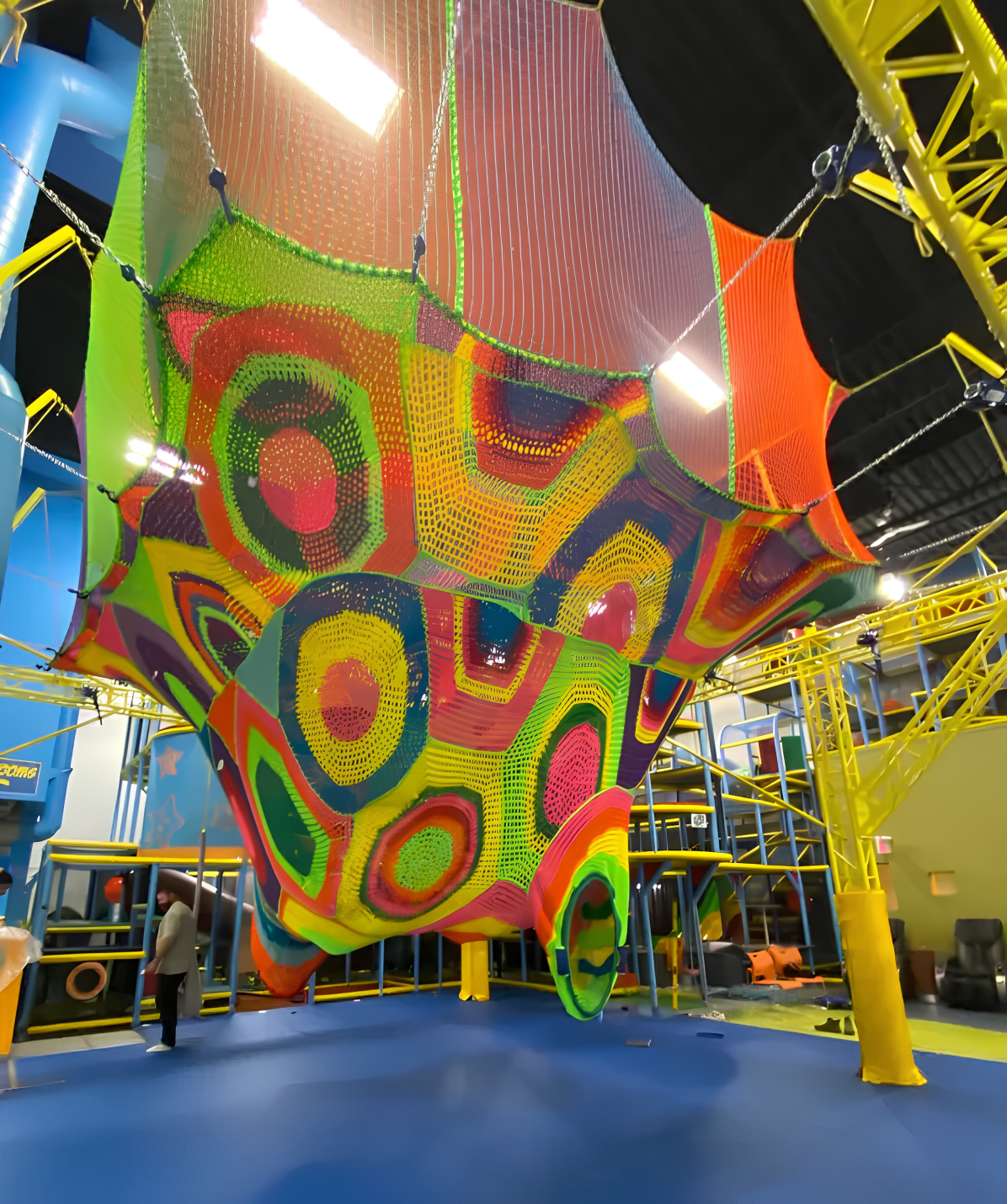
After building the indoor playground at Terwillegar Recreation Centre, with a highway and a traffic light among its features, Trevor would sit in there with a coffee for an hour or two and watch. Every visit he saw a child teeter, fall and go back at it while the parents stayed out of the way.
His 95 fast food restaurant playgrounds were built for physical movement and social play in a setting where some would question the nutritional value of the menu. He knows who uses them. Families who cannot drive across town to the best playground go because it is close, buy an 89-cent coffee and let the kids play. His favourite is in Sherwood Park. It has two separate ways in and out so a younger child never feels trapped by older kids, a high first step on the older children's route and a cartoon forest of soft shapes he calls blobs, which become whatever a child imagines.
Culture in the Design
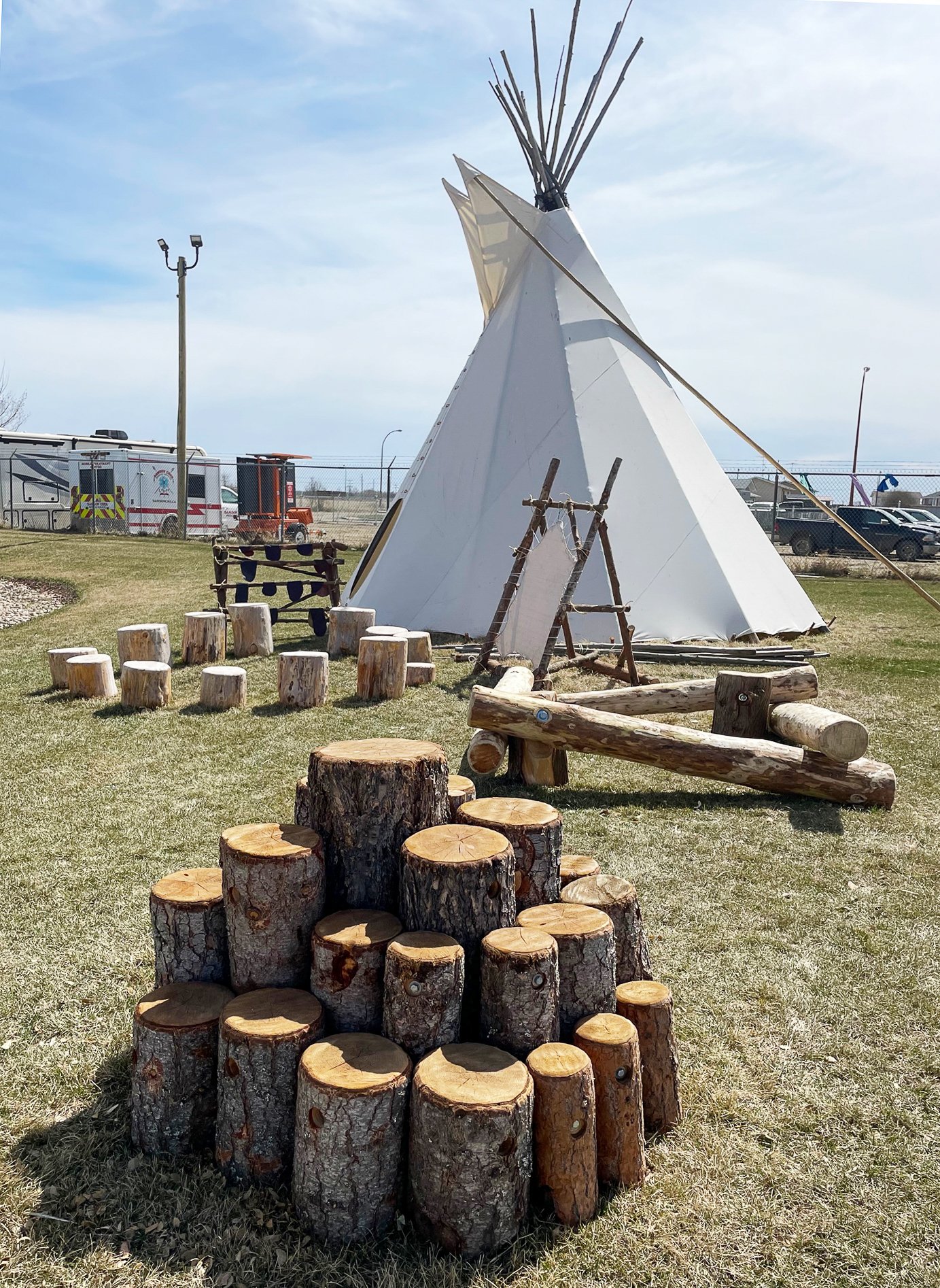
As he moves toward retirement, Trevor wants more of his work to help create equity in Indigenous communities, with culture built into the play space. At a childcare facility in Maskwacis, Peak Play built child-sized hide-stretching and meat-drying racks, a talking circle, tipi forms and carved animals that echo how the village harvested and processed its resources. A beaver lodge at the entrance holds a mother and two young beavers, with room for elders to sit inside and tell the origin stories. A simulated fire gets heavy use from the elders who work at the facility.
Room for the Adults
Trevor sees parents and grandparents at playgrounds far more often than when he was young, and he thinks it is a good thing. He likens it to multigenerational homes where grandparents helped raise the older kids and the older kids helped raise the younger ones. Designing for adults means seating, shade and something to do.
His favourite example comes from ipitup in Belgium. Two physiotherapists watching their kids at a soccer pitch realized they were both looking at their phones. They started doing step-ups and push-ups on the bench, and that became an activity bench with hundreds of exercises, built on World Health Organization physical activity guidelines. Peak Play has one set up in an Edmonton park that anyone can use for free. He has also installed benches with a solar panel set into the seat to charge a phone, since that is where many parents now run the family calendar.
Weather Is a Design Input
Weather is the biggest challenge in construction, Trevor says. At the time of recording, a pump track he is building in Edmonton's river valley was six weeks behind after rainfall well beyond what its drainage was designed for, and the structure was being modified with extra drainage. Logistics come close behind. A dock workers' strike in Montreal once left his containers of artificial turf circling the harbour while two fields waited in Fort McMurray.
Climate also changes how people use play spaces. Trevor describes families in hot places shifting to evening play, which calls for lighting that feels secure without glare, and for more shade. He describes one playground by Meghan Talarowski's team with a north-facing concrete arch that doubles as a bouldering wall over irrigated grass, a cool pocket children can retreat to when it is 38 degrees around them.
In Edmonton the problem is cold. Prevailing winds come from the west, and in Trevor's example a wind block turns a day that feels like minus 20 back into minus 10. South-facing pockets catch what sun there is. Snow, in his view, is a playground on its own.
Put the Children in the Room
Before any design, Trevor goes and sits on the site. He watches the traffic, the sun angle and how people come and go, and then he asks the community about its budget and its vision. The design phase can take a year or two before the funding is in place and equipment is ordered.
"When I'm meeting with a community group, I prefer to have children there."
Children's ideas come from an experience and a feeling. They want to recreate the rush of a zip line or the privacy of a space up high, and in Trevor's experience the playgrounds children help shape turn out best. He calls leaving them out the first thing designers get wrong.
Edmonton's playground renewal program asks residents which play elements and colours they want and passes the results to the designers as part of their instructions. Trevor's practice goes one step further. Hold the session when children can come, and ask them how the place should feel before anyone opens a catalogue.
After the recording, one of the hosts remembered a summer spent digging a hole under the trees with a sister, every day, until it was shoulder deep and a parent said it had to be filled in before someone got hurt. There was no goal. It changed day to day. Trevor said free play has a name for that. Children dig holes, and then they build bridges across them.
Referenced in this episode:
Peak Play Consulting. Trevor Zahara's firm, which designs and builds indoor and outdoor play spaces.
Outside Play Lab. Mariana Brussoni's research team at the University of British Columbia and BC Children's Hospital Research Institute, and the source of "as safe as necessary."
Studio Ludo. Philadelphia non-profit led by Meghan Talarowski that researches how design shapes the way people play.
ipitup. Belgian maker of the activity bench built for parents at the playground.
Sir Wilfrid Laurier Park. Naturalized playground with the coyote climbing structure and timber swings.
William Hawrelak Park. Reopened in 2026 after a three-year rehabilitation, with a new playground.
Terwillegar Recreation Centre. Home of one of Trevor's indoor playgrounds.
Mill Creek Ravine. Where Trevor watched children build their own playground while the equipment was closed.
UN Convention on the Rights of the Child. Article 31 recognizes the child's right to play.
Infrasound is produced by reVerb Communications. We tell the stories behind the infrastructure that shapes how communities live, move and grow.
