

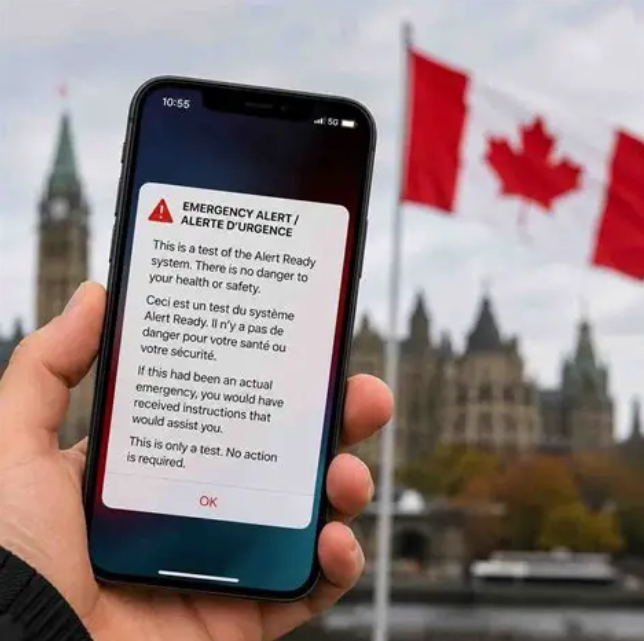
For a moment, everything else stops. You read the message. You look around. Maybe you check on someone you love. Maybe you turn on the news to find out what is happening. Maybe you do exactly what the alert asks you to do.
The entire interaction can take less than a minute.
But behind that minute is a communications system most Canadians rarely think about until they need it.
Canada's National Public Alerting System (NPAS) is designed to deliver critical emergency information to the public through television, radio, compatible wireless devices and other channels. At the centre of that system is the National Alert Aggregation and Dissemination (NAAD) system, operated by Pelmorex Corp.
Emergency communications are foundational public infrastructure, and yet most of us do not think about any of this when an alert appears on our phone. And that is the point. When communications work, they can be almost invisible.
The Infrastructure Behind the Message
The National Public Alerting System has recently been back in the news following another short-term continuation-of-operations contract with Pelmorex Corp. The latest federal contract, awarded in July 2026, runs for 12 months and is valued at just under $5 million.
The details of the contract are technical. But they raise a question that extends well beyond emergency alerts:
How much of the communications infrastructure we rely on every day do we only notice when something changes?
We tend to think of infrastructure as something physical. Roads. Bridges. Power grids. Transit systems. But infrastructure can also be the systems that allow information to move.
An emergency alert is a particularly visible example. The message may be short, but delivering it reliably depends on technology, coordination, processes, people and preparation that have to exist before an emergency happens.
An authorized government agency issues the alert.
The NAAD system, operated by Pelmorex, collects and validates it.
Wireless, television, radio and web distributors carry it to the public.
Your phone vibrates.
Source: Public Safety Canada
In February 2025, an earthquake struck north of Vancouver. Canada's Earthquake Early Warning system detected the shaking and passed the information through the National Public Alerting System, delivering warnings through cellphones, radio and television.
For those receiving the alert, the experience is meant to be simple: a warning arrives before the strongest shaking does. Those few seconds give people a chance to react, and the same alert can support critical infrastructure by halting trains and stopping traffic from travelling onto bridges and into tunnels. The value is not simply in getting a message out. It is in what that message allows people and communities to do.
reVerb plans crisis and public communications for organizations whose work affects the people around them, from notification protocols to the relationships a team relies on when conditions change. If your next public update does not have a plan behind it yet, we should talk.
Book a ConversationThe Communications People Do Not See
There is a tendency to think about communications as the final product: the news release, the social media post, the public meeting, the emergency alert. But those are only the visible parts. Good communication often starts much earlier.
It means understanding who needs information and when. It means knowing which conversations need to happen before a decision is made. It means having relationships in place before they are tested, understanding how quickly public attention can shift and having the capacity to respond when it does.
We saw a different side of this during the severe flooding that hit Manitoba this summer. After days of heavy rain, already-saturated communities across the province faced rapidly rising water, washed-out roads and power outages. In parts of the Parkland region, roads were damaged or cut off, leaving some communities difficult to access as emergency crews responded.
As conditions changed, so did what residents needed to know. Initial warnings about flooding gave way to more specific information about unsafe roads and how people should respond. Flood warnings and Alert Ready notifications became part of a broader flow of information about road access and public safety. The communication had to move with the crisis.
Storms drop 152 mm of rain on Boissevain after a wet spring. The Municipality of Boissevain-Morton declares a state of emergency for flash and overland flooding.
The provincial flood bulletin reports up to 50 roads damaged or under water, including every road into Duck Mountain Provincial Park. Residents are told to avoid crossing flooded roads, and travel into the area is not advised.
Alert Ready counts 393 emergency alerts issued in Manitoba so far this year.
Sources: CP24, Manitoba Flood Bulletin #9, Alert Ready
The goal is not simply to communicate more; it is to communicate the right information, at the right time, in a way that helps people understand what is happening and what comes next.
A major construction project might depend on a traffic plan, but it also depends on the public understanding what is changing, when it is changing and why. A new piece of public infrastructure might be technically sound, but that does not mean the community understands its purpose or its impacts.
That is where communications becomes part of the project itself: helping organizations anticipate questions, plan for change and build understanding before an issue becomes a problem.
- Who needs to hear this first, and how will it reach them?
- What will people need to know on day two?
- Who speaks for the project if the plan changes?
- Which relationships will this depend on, and are they in place today?
The Bigger Lesson
By the time the phone vibrates, or the news has the story or update, the planning has already happened. Whether the message is an emergency alert, a construction notice, a public consultation or an organization explaining what happens next after something goes wrong, much of the work has already taken place.
The public may never know how much planning went into a message that arrived at exactly the right moment. They simply receive it. And when the communications system works, they move on with their day.
Is your next public update already planned?
reVerb works with project owners and municipalities on public communications, stakeholder engagement and the construction notices that keep people informed as conditions change. We work across infrastructure, energy, municipal and construction sectors in Alberta and across Canada.
