

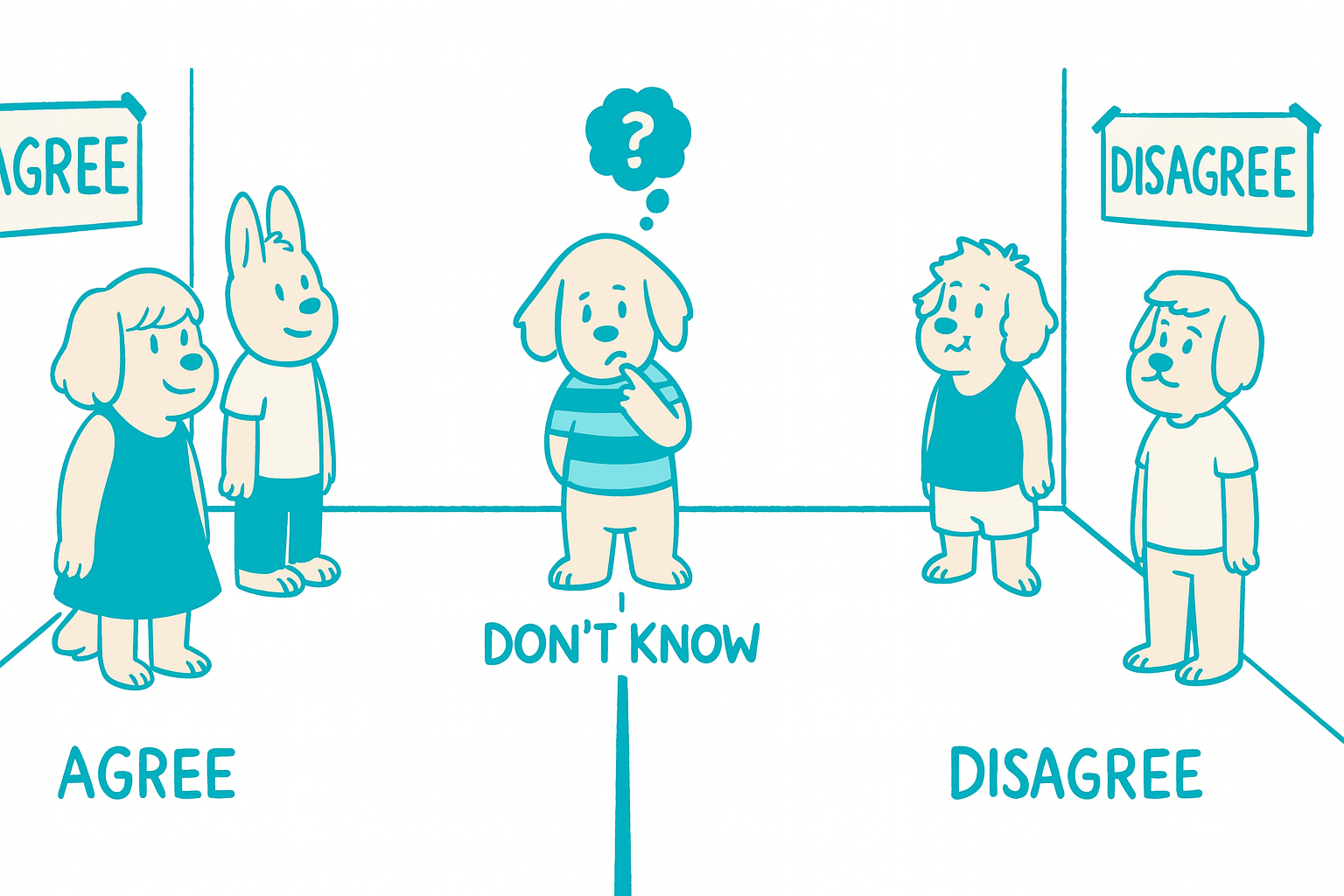
The human spectrogram is a facilitation activity that uses physical movement to show the range of opinion in a group. The facilitator reads a statement, and participants place themselves along a line on the floor that runs from "strongly agree" to "strongly disagree." The group can see at a glance where people stand, and the facilitator invites a few people to explain why.
It takes a few minutes to set up and little explanation, which makes it useful in community sessions, stakeholder workshops and internal team meetings.
"The construction schedule has been explained clearly to our neighbourhood."
When the Spectrogram Fits
- At the start of a workshop, to see where a group agrees and where it is divided.
- As an opener that gets people out of their chairs and talking.
- To explore a complex or sensitive topic without asking everyone to speak.
- Before and after a presentation, to see whether views have shifted.
The activity pairs with other tools. Soapboxing gives individuals time to share their experience in depth, and the spectrogram shows the spread of views across the whole room.
How to Run It
Use coloured tape to mark a line on the floor, with "strongly agree" at one end and "strongly disagree" at the other.
Read one clear statement at a time and give people a moment to choose their spot.
Ask a few people at different points along the line to explain their choice. Speaking is always optional.
Let people move if something they hear changes their view, and ask what changed their mind.
Writing Good Statements
The statements shape the conversation. Plan for five to ten. Each one should be neutral in wording, cover one idea and be easy to understand when heard once. Some examples for a project setting:
- "I feel confident taking part in public consultations."
- "I know where to find information about this project."
- "Technical expertise should carry more weight than community input in this decision."
- "The project team has been easy to reach when I have had questions."
We design engagement sessions for municipalities, project owners and organizations across Alberta, including the statements and activities that go into them.
Explore Public ConsultationPlanning for Every Participant
The spectrogram needs enough open floor for people to move, and some participants will not be able to stand or walk the line. Plan alternatives in advance so everyone can take part.
- Offer coloured cards or a show of hands so people can respond from their seats.
- Let a partner place a marker on the line on someone's behalf.
- Run a version on a wall chart with sticky dots for smaller rooms.
- Use a live poll for online sessions or for participants joining remotely.
Some people may prefer not to explain their position in front of the group. Their spot on the line still counts. Have a note-taker record where people stood for each statement and the main reasons shared, so the results can be included in the summary of what was heard.
- What do we want to learn about how this group sees the issue?
- Are our statements neutral, clear and focused on one idea each?
- Is there enough space, and what is our option for people who cannot stand or move?
- Who will record the results and the reasons people share?
- How will we report back to participants on what we heard?
Planning a workshop or community session?
We can help you choose the right activities, write the statements and facilitate the session.
